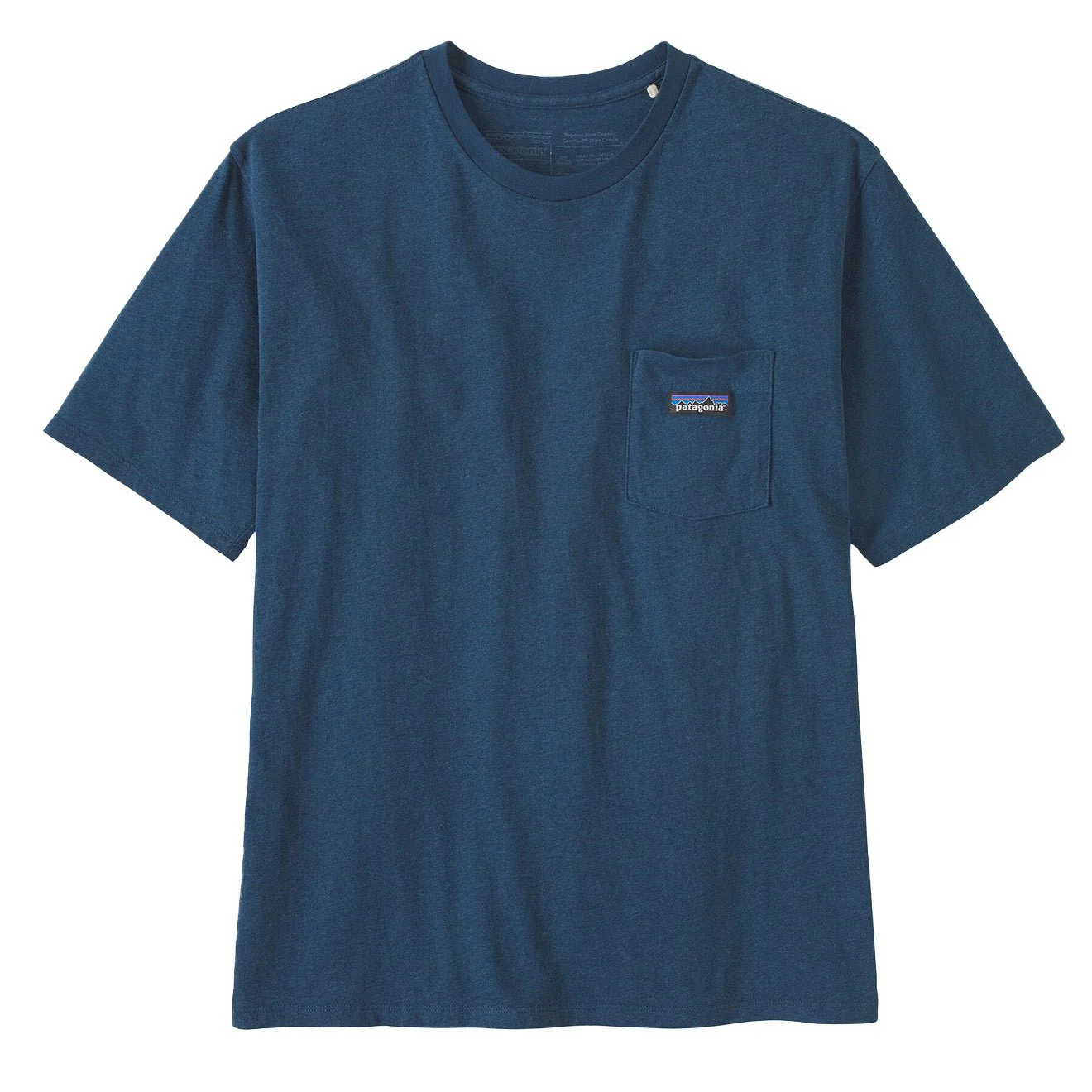
Patagonia Daily Pocket Tee Tidepool Blue
The Patagonia Daily Pocket Tee in Tidepool Blue is made from 100% Organic Certified™ cotton and is built to be a staple in your closet. This lighweight t-shirt features a front pocket and has a crewneck styling.
Product Features:
Regular Fit
Classic Crewneck Styling
Classic crewneck styling with patch-on left-chest pocket
Comfortable and Smooth on Skin
Soft rib-knit trim at the neck feels comfortable and smooth on the skin
Straight Hem
Made with a straight hem to go with most every situation, from casual hangout to job site
Weight
170 g
100% Regenerative Organic Certified™ Cotton
Made of 100% Regenerative Organic Certified™ cotton from farms working toward the highest organic standard, which aims to rehabilitate soil, respect animal welfare and improve the lives of farmers; these practices reduce greenhouse gas emissions and could help trap more carbon than conventional agriculture
Product Information
Product Information
Shipping & Returns
Shipping & Returns


Patagonia Daily Pocket Tee Tidepool Blue
Patagonia Daily Pocket Tee Tidepool Blue
The Patagonia Daily Pocket Tee in Tidepool Blue is made from 100% Organic Certified™ cotton and is built to be a staple in your closet. This lighweight t-shirt features a front pocket and has a crewneck styling.
Product Features:
Regular Fit
Classic Crewneck Styling
Classic crewneck styling with patch-on left-chest pocket
Comfortable and Smooth on Skin
Soft rib-knit trim at the neck feels comfortable and smooth on the skin
Straight Hem
Made with a straight hem to go with most every situation, from casual hangout to job site
Weight
170 g
100% Regenerative Organic Certified™ Cotton
Made of 100% Regenerative Organic Certified™ cotton from farms working toward the highest organic standard, which aims to rehabilitate soil, respect animal welfare and improve the lives of farmers; these practices reduce greenhouse gas emissions and could help trap more carbon than conventional agriculture
Original: $69.00
-65%$69.00
$24.15Product Information
Product Information
Shipping & Returns
Shipping & Returns
Description
The Patagonia Daily Pocket Tee in Tidepool Blue is made from 100% Organic Certified™ cotton and is built to be a staple in your closet. This lighweight t-shirt features a front pocket and has a crewneck styling.
Product Features:
Regular Fit
Classic Crewneck Styling
Classic crewneck styling with patch-on left-chest pocket
Comfortable and Smooth on Skin
Soft rib-knit trim at the neck feels comfortable and smooth on the skin
Straight Hem
Made with a straight hem to go with most every situation, from casual hangout to job site
Weight
170 g
100% Regenerative Organic Certified™ Cotton
Made of 100% Regenerative Organic Certified™ cotton from farms working toward the highest organic standard, which aims to rehabilitate soil, respect animal welfare and improve the lives of farmers; these practices reduce greenhouse gas emissions and could help trap more carbon than conventional agriculture